Qigong Breathing Exercises
In 2008, I was introduced to a set of unique qigong breathing exercises by Zhineng Qigong teacher Jane Jin. As I started incorporating them into my daily practice the effects were remarkable—I felt more awake, calm, insightful and stronger than ever before. These breathing exercises also helped to deepen and enhance my other qigong practices.
These exercises blend modern science, classical Chinese medicine, qigong and yoga. They not only promote self-healing and fitness but also enhance meditation practices. With regular practice, they can activate qi, restore vitality, maintain health, and even promote longevity.
The breathing exercises work by activating the body’s micro-circulatory system, energy centers, and vital organs. This activation creates noticeable benefits across various systems, including respiratory, digestive, circulatory, immune, and urinary systems. Essentially, they help to awaken and conserve vital energy, fueling all our activities.
The Foundation
These breathing exercises were designed for today’s world, making them accessible to everyone who wants to improve their health and spiritual growth. They’re based on the Hunyuan Rhymed Formula introduced by Zhineng Qigong’s founder, Dr. Pang, which emphasizes:
“Hunyuan qi is invisible and formless while also being visible and substantial. Yin yang become one. Qi creates all life through the natural rhythm of open/close, gather/condense, disperse/dissolve, transform/transmute.”
Qigong Breathing Exercises
This qigong breathing system includes an opening meditation, three distinct breathing methods, head massages, and a closing meditation.
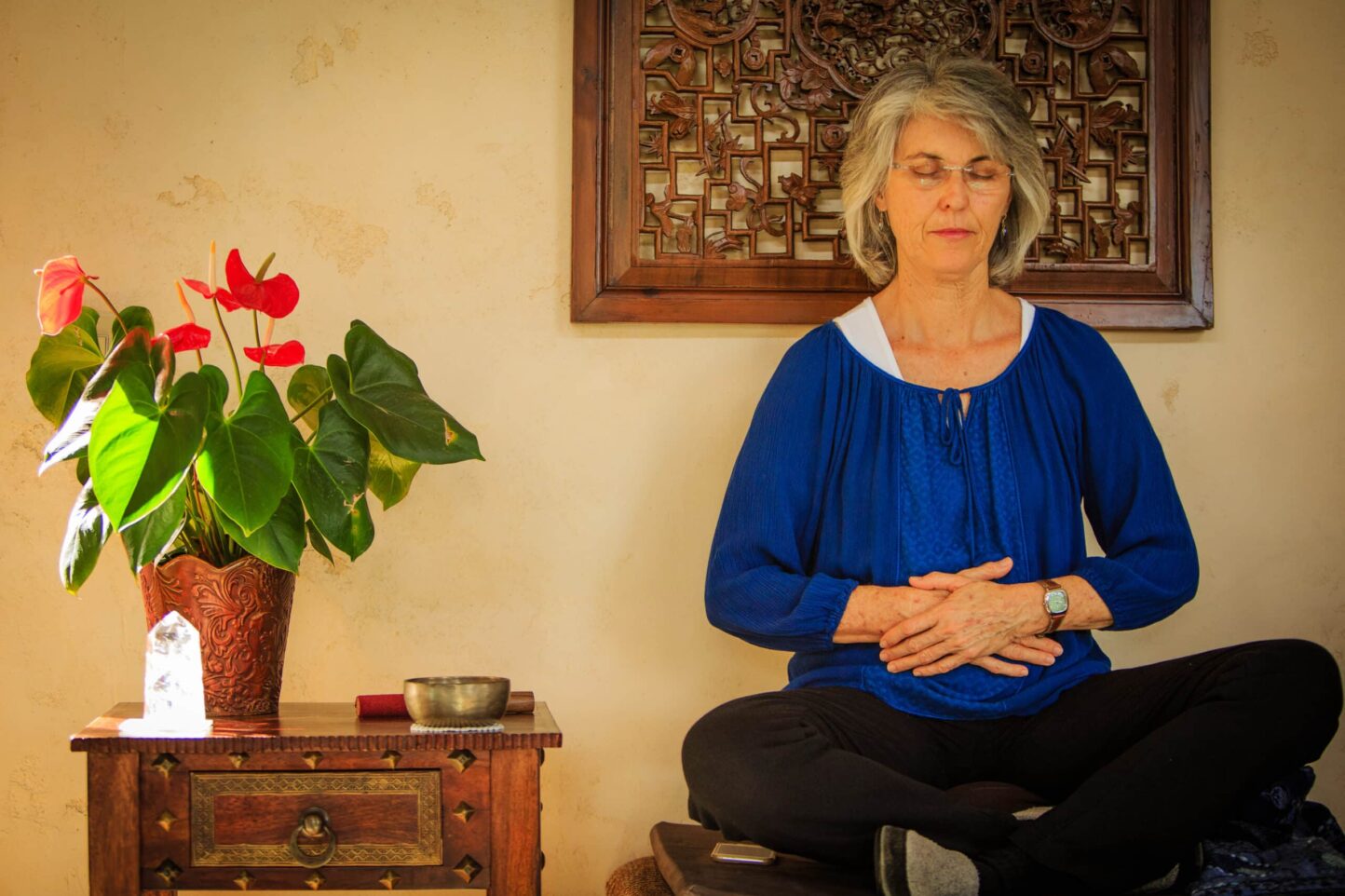
The preparatory or opening meditation calms the heart and opens the mind. Through this meditation we become centered, grounded and more connected with nature. This alone reduces stress and boosts overall wellness.
The breathing exercises are designed to activate and achieve resonance of the three main dantians in the body. Each method uses specific hand positions, called mudras, to enhance the practice. For example, the use of a mudra with palms placed together greatly enhances the effectiveness of the practice as circulating energy between the palms balances yin and yang.

First Exercise
This uses alternate breathing to awaken the micro-circulatory system, promoting qi flow throughout the body and enhancing lung and brain functions.
Second Exercise
This focuses on circulating energy between the brain and lower abdomen, connecting the three dantians.
Third Exercise
This massages the five major organs through the up and down movement of the diaphragm. It awakens qi in organs and enhances qi in lower dantian. All systems of the body are improved from the up and down movement of the diaphragm. When it moves up, the diaphragm massages the heart and lungs. When it moves down, it activates the liver, pancreas, digestive system, kidneys, and more.
Head Massage

Head massage is incorporated to activate all meridians in the head and to boost qi circulation and balance qi through the whole body after each breathing exercise. This also activates the nerves of the scalp and many acu-points on the head while promoting qi to nourish the brain’s nerve cells. Head massage is beneficial when paired with breathing but can also be done on its own.
Closing Meditation

The breathing exercises and head massage are followed by a closing meditation called yang qi to gather, condense and store energy in the lower dantian. Allocating plenty of time for the practice of yang qi is important as it will help to effectively fill lower dantian with qi which helps enhance wellness and balance emotions.
How to Start your Practice
These breathing exercises have become a cornerstone of my practice, and many students share the same sentiment, finding them incredibly beneficial. If you’re interested in a video that describes how to practice them, contact us with a message requesting the breathing exercises video and we’ll send you the link!
Once you have the basics down you can use our recordings to support your practice. Check out the 30 minute recording for beginners and when you feel ready to upgrade your practice move to the 45 minute recording. We also offer classes throughout the year.

Hi Martha,
These Qigong breathing exercises sound wonderful! I am interested in learning more. Will you be teaching them at the 12/5/15 workshop in Elfin Forest?
Looking forward to seeing you soon!
OK, I’m inspired to once again start my breathing practice.
Hope all is unfolding well for you and Leonard in your wonderful Hawaiian home.
Have been enjoying Mary’s classes. I know she will be with you next week.
Looking forward to having both of you back later this month.
I picked a bag of persimmons and will take the to my yoga studio……….they will go in a heartbeat! Thanks.
Love, Sandy
OK, I’m inspired to once again start my breathing practice.
Hope all is unfolding well for you and Leonard in your wonderful Hawaiian home.
Have been enjoying Mary’s classes. I know she will be with you next week.
Looking forward to having both of you back later this month.
I picked a bag of persimmons and will take the to my yoga studio……….they will go in a heartbeat! Thanks.
Love, Sandy